Rice-to-Water Ratio Calculator & Inner-Pot Line Visualizer
This rice-to-water ratio calculator keeps you from making the #1 electric rice cooker mistake: using a stovetop 1:2 water ratio, which turns sealed rice wet and mushy (bechabecha). If you have your cooker's original 180 ml plastic cup (go / 合), fill water to the matching line inside the pot. If you lost that cup and are using a 240 ml US kitchen cup, tap your grain and cup below to see the exact water level.
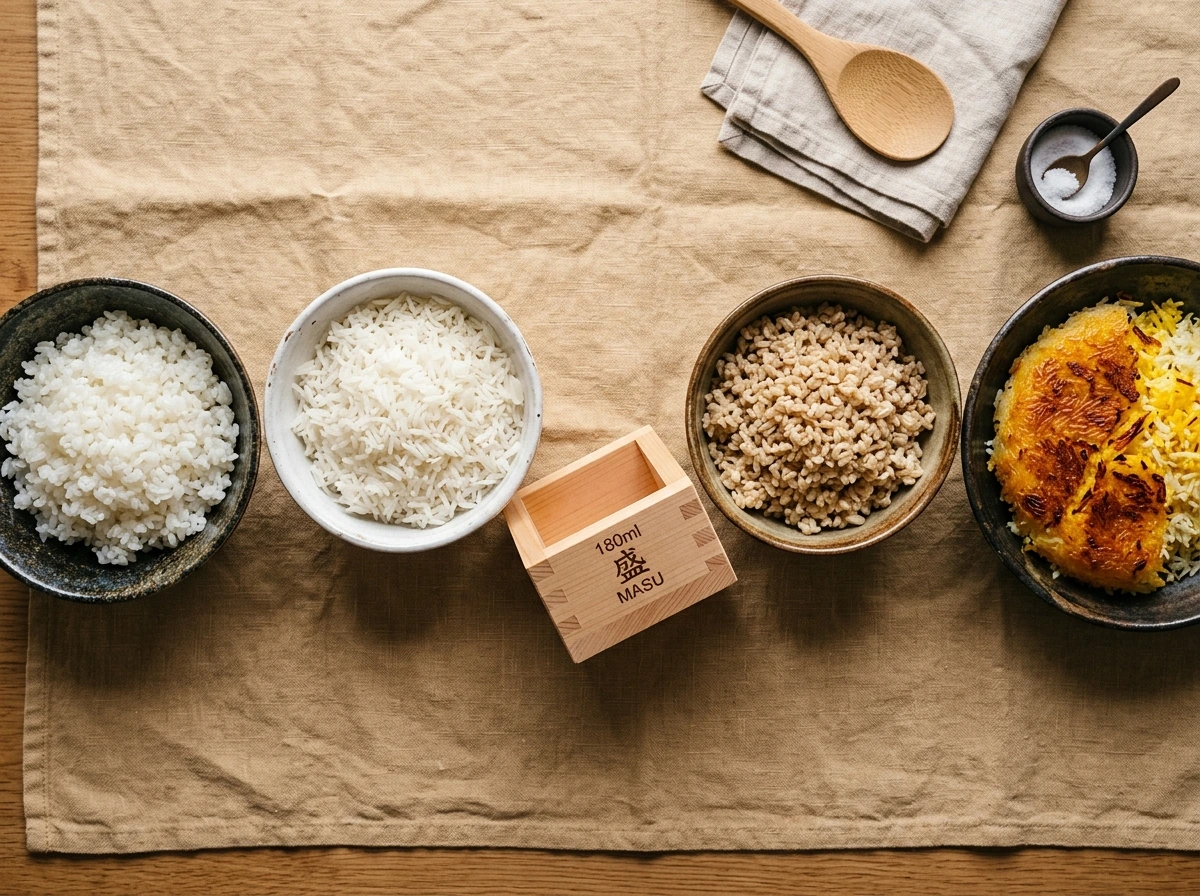
Tap Your Grain, Measuring Cup & Batch Size
Watch the matte-black inner pot cutaway and grain specimen preview update in real time with exact milliliters, kitchen scale grams, US cups, and pot scale markings.
3 Rice Cooker Cups (go) of White Rice → Fill to Pot Line 3 (or Pour 3.45 go Cups / 621 ml Water)
Prep & Rinse: Rinse 3 to 4 times until water runs mostly clear to remove surface starch and prevent soggy rims.
Reviewer's note: Why black inner pots make water marks so easy to read:On my Zojirushi NL-EAC18BA, because the inner pot is black (
内釜が黒いので), the water-level marks stand out clearly and are easy to see (水加減の目盛りがくっきりと見やすく、水の調整がとても簡単です). Adjusting the water for Jasmine, Sushi, Brown, Quinoa, or Porridge takes no guesswork at all.
Rice Cooker Water Ratio Chart (All 9 Grains)
Ratios below are checked against Zojirushi America's grain charts (zojirushi.com/grains) and Cuckoo's electric rice cooker guidelines.
| Grain Type & Kernel Shape | Water Ratio (By Volume) | Water per 1 Rice Cup (180ml Go) | Water per 1 US Cup (240ml) | Inner Pot Scale Line | Cooked Yield (per 1 Cup Dry) |
|---|---|---|---|---|---|
| White Rice (Short / Medium Grain / Japanese) 白米 (Hakumai) • 5.3 × 2.8 mm (1.9:1 oval) | 1 : 1.1 to 1.2 | 207 ml | 276 ml (1.15 US cups) | WHITE line | ~2.2x |
| Sushi Rice (Short Grain for Seasoned Vinegar Rice) すしめし (Sushimeshi) • 5.0 × 2.9 mm (1.7:1 round pearl) | 1 : 1.0 to 1.1 | 189 ml | 252 ml (1.05 US cups) | SUSHI line | ~2.1x |
| Jasmine Rice (Thai Fragrant Long Grain) ジャスミンライス • 7.0 × 2.0 mm (3.5:1 slender) | 1 : 1.2 to 1.3 | 225 ml | 300 ml (1.25 US cups) | JASMINE or WHITE line | ~2.4x |
| Long Grain White Rice (American / Carolina) 6.6 × 2.1 mm (3.1:1 long) | 1 : 1.25 to 1.35 | 234 ml | 312 ml (1.3 US cups) | LONG GRAIN WHITE or WHITE line (+1 tbsp per cup) | ~2.5x |
| Basmati Rice (Aged Indian / Pakistani Long Grain) 8.0 × 1.8 mm (4.5:1 needle) | 1 : 1.35 to 1.5 | 252 ml | 336 ml (1.4 US cups) | LONG GRAIN WHITE line (+2 tbsp per cup) | ~2.6x |
| Brown Rice (Short, Medium, or Long Whole Grain) 玄米 (Genmai) • 5.5 × 2.8 mm (unmilled bran) | 1 : 1.5 to 1.65 | 279 ml | 372 ml (1.55 US cups) | BROWN line | ~2.4x |
| GABA Brown Rice (Activated / Germinated Brown) 発芽玄米 • 5.5 mm + 0.8 mm sprout bud | 1 : 1.5 to 1.65 | 279 ml | 372 ml (1.55 US cups) | BROWN line | ~2.4x |
| Quinoa (White, Red, or Tri-Color) キヌア • 2.0 mm flat-round seed disc | 1 : 1.33 to 1.4 | 243 ml | 324 ml (1.35 US cups) | QUINOA line (or 1.35 cups water per cup) | ~2.5x |
| Congee / Okayu (Rice Porridge) おかゆ (Okayu) • 8–10 mm bloomed split kernels | 1 : 5 (Thick Okayu) to 1 : 8 (Thin Congee) | 900 ml | 1200 ml (5 US cups) | PORRIDGE / CONGEE line | ~6x |
Fine-Tuning By 1 to 2 Millimeters
Newly harvested autumn rice (shinmai / 新米) naturally holds more moisture inside the grain. If a batch comes out slightly softer than you like, pour water 1 to 2 millimeters below the pot line next time, and fluff right away with your shamoji paddle when the cooker finishes. If your rice is still wet around the edges, read my Mushy (Bechabecha) vs. Hard Rice Guide.
Common Questions
What is the general rice-to-water ratio for a rice cooker?
In an electric rice cooker (which traps steam and loses far less water than a stovetop pot), the standard ratio by volume is 1 : 1.1 to 1.2 for Japanese short/medium white rice, 1 : 1.05 for sushi rice, 1 : 1.25 for jasmine rice, 1 : 1.4 for basmati, and 1 : 1.55 for brown rice. Always use the water lines stamped inside your pot first if you have the original 180 ml cup.
What if I lost my 180 ml rice cooker measuring cup and only have a US cup?
If you scoop dry rice with a standard 240 ml (8 fl oz) US measuring cup, DO NOT fill water to the numbered lines inside your rice cooker pot, because those lines are calibrated for smaller 180 ml cups. Instead, measure your water using the same 240 ml US cup according to my visualizer below.
Why did my rice come out mushy (bechabecha) when I used a 1:2 water ratio?
A 1:2 rice-to-water ratio is meant for a stovetop saucepan where half the water boils away as steam. Sealed electric rice cookers lose very little moisture, so a 1:2 ratio drowns the grain and turns it soggy (bechabecha).
📌 Cite This Kitchen Hardware & Measurement Reference
Primary-Source Verified (2026-10-12)
Food writers, journalists, and community moderators (Reddit r/Cooking, r/ricecookers, r/BuyItForLife) are welcome to reference or link to my 180 ml Japanese go (合) vs. 240 ml US cup conversions, detachable inner-lid audit, and manufacturer wattage tables with attribution to RiceHearth.